
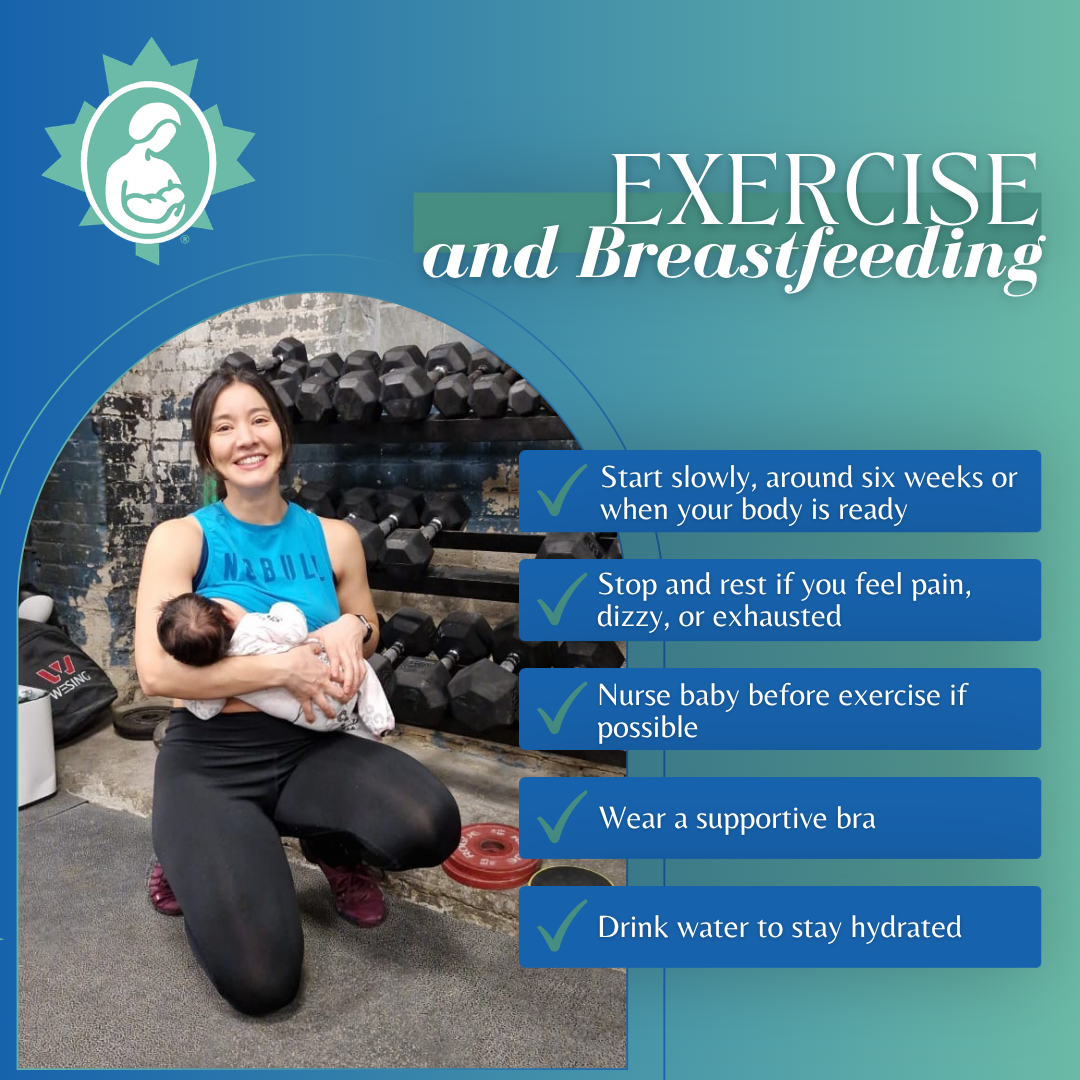
Moving your body is good for your health. Many parents who breastfeed enjoy exercise because it boosts energy, supports mood, and helps the body feel stronger. Exercise also supports heart health, sleep, and overall well-being.
Will exercise affect your milk?
Research shows that exercise does not reduce your milk supply. Your body continues to make milk that meets your baby’s needs. Breastfeeding mothers around the world have stayed active while nursing, including during physically demanding work.
Some parents notice that after very intense exercise, their babies seem briefly fussy at the breast. This passes quickly and does not harm your baby or your milk. This is due to lactic acid usually. Mild and moderate exercise don't usually cause lactic acid buildup. Hormonal changes in pregnancy cause laxity in ligaments and this is important to keep in mind when starting exercising. A physiotherapist can be seen if issues like pelvic floor dysfunction, lower back pain, abdominal weakness cause pain etc.
When to begin exercising?
Many mothers wait until their baby is about six weeks old before starting regular exercise. If you had a cesarean birth or complications, talk with your healthcare provider before increasing activity.
Start slowly. Give your body time to heal and rebuild strength.
Types of exercise to try
Gentle activities work well in the early weeks:
- Walking
- Stretching
- Light aerobic movement
- Swimming or water exercise
You can increase intensity over time as your body feels ready.
Helpful tips for comfort
- Drink water so your body stays hydrated.
- Wear a supportive bra to reduce breast discomfort.
- Feed your baby before exercise if your breasts feel full.
- Shower or rinse sweat off your chest before nursing if your skin feels salty.
Exercising with your baby
Some activities can include your baby:
- Walking with a stroller
- Babywearing while walking
- Mommy and baby exercise or yoga classes
These activities support bonding while keeping you active.
Listening to your body
Every body heals on its own timeline. Some mothers feel strong quickly. Others need more time. Pay attention to signs like pain, dizziness, or exhaustion. Rest when needed.
Hormonal changes in pregnancy cause laxity in muscles and ligaments. This is important to keep in mind when starting exercising. A physiotherapist can be seen if issues like pelvic floor dysfunction, lower back pain , abdominal weakness cause pain etc.
Exercise supports your health. Breastfeeding supports your baby. Both work well together. If you have questions or want reassurance, reach out to an LLLC Leader.
Resources:
Information from LLLI - https://llli.org/breastfeeding-info/exercise/
Information from LLL GB - https://laleche.org.uk/exercise-and-breastfeeding/